
- Complaint/petition (if filed), or a short case summary and key allegations.
- Crash report(s), witness statements, and any other crash reports for the same location.
- Discovery materials and deposition transcripts (if available).
- Opposing expert report(s), if one has been served.
What this service helps with
When a crash is attributed to the condition of the road surface itself, such as a pothole, a pavement edge drop-off, a rutted or slick pavement, or debris that came out of the roadway, the questions become who was responsible for that condition, what the applicable requirements were, and whether the responsible party met them.
We help attorneys assess whether a roadway condition was deficient under the specifications, manuals, and guidance that governed it, and which party, whether the owner agency, a construction contractor, or an inspection consultant, held the duty to prevent, correct, or warn of it.
As a Professional Engineer and Professional Traffic Operations Engineer, Jeff Sanchez has managed roadway maintenance operations as a Maintenance Engineer for the New Mexico Department of Transportation, managed paving and highway construction projects for contractors, and reviewed contractors’ work on behalf of a state department of transportation agency.
That experience allows him to read maintenance diaries, inspection reports, and specifications the way the people who wrote them intended.
When attorneys call on us

Potholes & failed patches

Rutting, Bleeding & Slick Pavement

Exposed Longitudinal Edge & Uneven Lanes

Roadway Surface Debris

Pre-Existing vs Construction-Created Defects

Disputed Responsibility for Roadway Conditions

Agency Maintenance & Prior Notice

Conflicting Expert Opinions
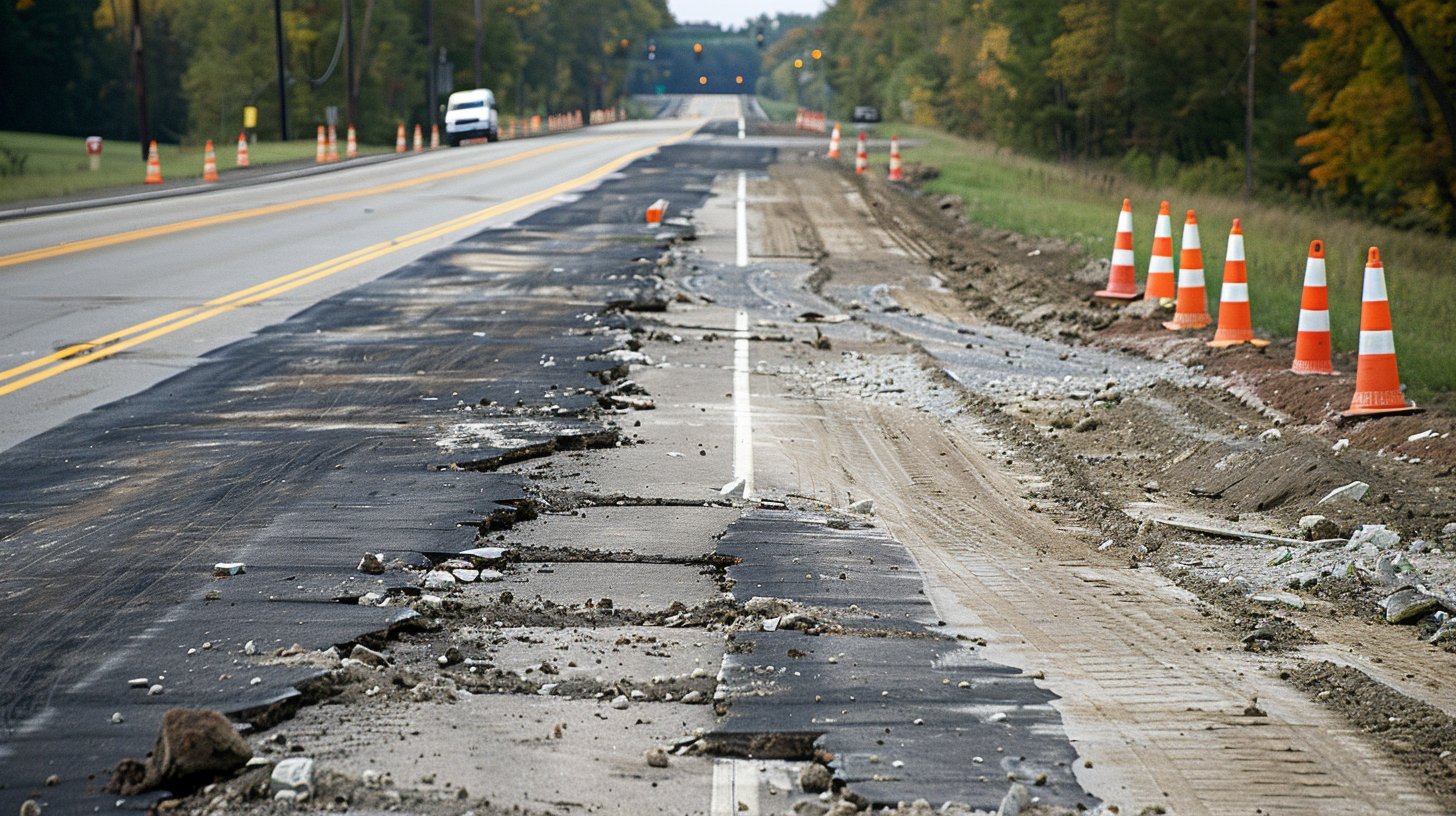
- A vehicle or motorcycle lost control after encountering a pothole, a failed pavement patch, or a pavement edge drop-off
- A crash occurred on a rutted, bleeding, or otherwise slick pavement, particularly in wet weather
- An exposed longitudinal edge or uneven lanes were left between travel lanes during milling and paving operations
- Debris that came out of the roadway surface caused or contributed to a crash
- There is a dispute about whether the defect existed at the time of the crash, or whether it was pre-existing or created by a construction project
- Responsibility for the condition is disputed among the owner agency, the general contractor, a subcontractor, or a construction inspection or management consultant
- An agency’s maintenance program, pavement preservation treatment, or response to complaints and prior crashes is called into question
- There are conflicting expert opinions, or a need to respond to an opposing expert
The key questions we can answer
The purpose of our evaluation is to give you a clear, defensible view of what condition the roadway was in, what the governing documents required, and who was responsible. Depending on the facts, we can address questions such as:
- What the condition of the pavement was at the time of the crash, and whether photographs, video, or imagery taken later actually represent it.
- Whether the condition qualifies as pavement distress under FHWA classifications, and whether it created a hazardous dry or wet driving condition.
- Whether a pavement edge drop-off, edge slope, or difference in elevation between lanes exceeded what the state specifications allowed, and whether barricades or an UNEVEN LANES sign were required.
- Whether a contractor’s paving, milling, or patching operations complied with the contract documents and specifications, including requirements to eliminate exposed edges within a shift and before weekends and holidays.
- Whether a pavement preservation treatment, such as a chip seal or fog seal, was designed and applied correctly, and whether the agency’s own records show that it was not.
- Whether the owner agency knew or should have known of the condition, based on maintenance diaries, pavement management records, work orders, complaint history, and prior crashes at the location.
- Whether a construction inspection or management consultant had a contractual duty to find, mark, or correct the condition, and whether the condition was within the limits it was assigned to inspect.
- Whether the condition was pre-existing or created by the project, and what that means for each party’s duty.
How we approach the evaluation
We keep the work focused on the questions the case needs answered, and explain conclusions in clear, usable language that holds up under challenge.
- Review materials and confirm scope (what you need answered, by when, and what’s available).
- Identify the applicable requirements for the roadway (the owner agency’s specifications, construction and maintenance manuals, contract documents, and FHWA guidance in effect at the time).
- Establish the condition at the time of the crash from day-of-crash photographs and video, police body-worn camera footage, historical aerial and street-level imagery, and, where the condition still exists, a site inspection with measurements.
- Trace responsibility through the contract documents, specifications, and agency records to determine which party held the duty to prevent, correct, or warn of the condition.
- Explain findings clearly, supported by exhibits that can be used in deposition and trial.
What the attorney will receive
- ✓ Initial case review or preliminary opinion (timeframe agreed upon at engagement).
- ✓ Written expert report (scope dependent).
- ✓ Supporting visuals, such as annotated photos, measured edge and cross-section diagrams, dated imagery comparisons, and plan mark-ups.
- ✓ Support for attorney conference and deposition preparation.
- ✓ Trial testimony, if required.
- ✓ Supplemental or rebuttal reports responding to an opposing expert’s opinions.
- ✓ Sworn declarations or affidavits, where required.
What we need from you to get started
The most helpful starting point is whatever materials you currently have. If some items are not available yet, we can advise on alternatives and next best sources. Aerial and historical street-level imagery, FHWA publications, and agency specifications and manuals are resources we obtain ourselves.
Photos, video, and scene documentation
- Scene photographs and video from the day of the crash, including police body-worn and dash camera footage.
- Photographs of the condition taken by the parties, with dates.
- Any measurements, scan data, or surveys already collected by other experts.
Agency maintenance and construction records
- Maintenance daily diaries, work orders, pavement management system reports, and complaint or service-request history for the location.
- Records of any pavement preservation treatment (chip seal, fog seal, overlay), including application rates and limits.
- Prior crash history for the segment, if obtained.
PROJECT DOCUMENTS (WHEN THE CRASH OCCURRED IN A WORK ZONE)
- Construction plans, typical sections, and the temporary traffic control plan.
- The owner–contractor contract, special provisions, pay items, and standard specifications.
- Professional services agreements for inspection or construction management consultants, and any subconsultant agreements.
- Daily inspection reports, daily activity reports, inspector diaries, and traffic control inspection reports.
- Change orders, contract modifications, schedule comments, and correspondence about the condition.
- Contractor incident or near-miss reports.
Standards and guidance relied on
Depending on the jurisdiction and the issues in dispute, we may reference:
- State DOT standard specifications for road and bridge construction, including provisions on pavement edge drop-offs, joints and exposed edges, maintenance of traffic, and the contractor’s responsibility for the work.
- State DOT construction manuals, maintenance manuals, and temporary traffic control design guidelines.
- The contract documents, special provisions, and plans specific to the project at issue.
- FHWA’s Distress Identification Manual for the Long-Term Pavement Performance Program, and FHWA guidance on pavement friction, drainage maintenance, and rutting.
- The Manual on Uniform Traffic Control Devices (MUTCD), including the state supplement or state-adopted version, for signing of uneven lanes and other surface conditions.
- AASHTO’s Roadside Design Guide (pavement edge drop-offs) and published research on pavement edges and vehicle stability, applied with their stated limitations.
- Applicable federal references where relevant (for example, 23 CFR Part 924 on highway safety improvement programs).
FAQs
General
What do you need first to provide an initial review?
A copy of the complaint (if filed) will help us understand the general case facts. We can also use information contained in the complaint to determine whether we have any conflicts of interest with the parties involved. After reviewing the complaint and confirming no conflicts of interest, we may ask for more documents specific to the matter.
Can you evaluate a roadway condition without a site visit?
In many cases, yes. Pavement conditions are often repaired or overlaid before we are retained, so the evaluation relies on day-of-crash photographs and video, historical imagery, and agency records. When the condition still exists, a site inspection with measurements is valuable, and we will recommend one.
How quickly can you provide a preliminary opinion?
<p>
The timeframe will vary depending on case specifics; however, we can generally provide a preliminary opinion within two weeks, and sometimes sooner.
</p>
Do you help rebut an opposing expert’s opinions?
Yes. We will review an expert’s opinion, evaluate their methodologies, and rebut specific aspects of their opinions, as appropriate.
Can you provide exhibits for deposition and trial?
Yes, we will provide exhibits as appropriate based on available evidence and industry standards.
Do you work alongside an accident reconstructionist?
We are often retained on the same cases as accident reconstructionists; however, our evaluations are generally unrelated. Accident reconstructionists focus on how a collision occurred and what occurred during the collision, while we focus on the condition of the roadway and who was responsible for it. Where scaled site data is needed, we often work with the reconstructionist to obtain it.
Do you work for both plaintiffs and defendants?
Yes. We are retained by plaintiffs and by defendants, including public agencies, contractors, and construction inspection and management consultants. Our evaluation follows the same method regardless of who retains us.
Roadway condition
Who is responsible for a pothole or other pavement defect?
It depends on where the duty was placed in writing. Outside a construction project, the owner agency, whether a state, county, or city, is generally responsible for maintaining the roadway.
Within a project, the contract and standard specifications typically place the work, and the roadway within the work limits, under the charge and care of the contractor until final acceptance. Inspection and construction management consultants have only the duties their professional services agreements give them.
Does a construction inspection consultant have a duty to find and mark pavement defects?
Under most state specifications, an inspector inspects the contractor’s work for conformance with the plans and specifications and has no authority to direct the contractor’s operations or act as its foreman. We compare the agreement, the specifications, and the daily reports to determine what the consultant was actually assigned to inspect, and where.
How do you determine what condition the roadway was in at the time of the crash?
We rely on evidence dated to the crash: scene photographs, police body-worn camera footage, and the agency’s own inspection or maintenance records from that period, corroborated by historical street-level imagery from before and after the crash.
Photographs taken months or years later, or after the pavement has been repaired or overlaid, do not establish the condition at the time.
How much of a pavement edge drop-off is too much?
The governing state specification controls and it varies by state. Many specifications limit a vertical drop-off at the pavement edge to a stated maximum, require a constructed edge slope of a stated grade where the drop-off is greater, and require barricades where neither is provided.
Between travel lanes, specifications and construction manuals commonly require exposed longitudinal edges to be eliminated within a shift and traffic control guidelines set the elevation difference at which an UNEVEN LANES sign is required.
We measure the edge, or establish its height from the record, and compare it to the requirement that applies.
Can an agency’s verbal direction excuse a contractor from a specification requirement?
Under most state specifications, no. A deviation must be authorized by a documented contract modification. An inspector’s or resident engineer’s informal comments, acquiescence, or inspection do not waive the requirement.
Often. For an owner agency, its maintenance daily diaries, pavement management records, work orders, complaint history, and prior crashes at the location show what it knew and when. For a contractor, the specifications generally place the work under its care regardless of notice.
Can rutting, bleeding, or a chip seal be a hazard?
Yes. Rutting and bleeding are classified by the FHWA as pavement distress. Ruts deep enough to hold water and a bleeding surface that has lost its texture reduce friction, particularly at highway speeds in wet weather.
An over-applied chip seal or fog seal can leave a road less safe than it was before treatment, and the agency’s own application records will usually show whether that occurred.
Can you use other crashes at the same location?
Yes. Where records are available, we locate other crashes on the segment by their reported coordinates and conditions to determine whether they corroborate a defective roadway condition.
Practical details
Jeff Sanchez is a licensed Professional Engineer in Arizona, Colorado, Florida, Illinois, Nevada, New Mexico, North Carolina, Texas, and Washington, and a nationally certified Professional Traffic Operations Engineer (PTOE No. 4732). We can confirm site visit options, the engagement process (including conflict checks), and the billing approach when you inquire.
Next step
Send a short case summary and the key materials you have so far, and we’ll advise the best next step for an initial review.